Grow through useful conversations
The strongest reason to follow an account is a clear expectation of value. Conversations help you learn what that value is and make it visible to others.
Use one conversation to improve the next item in your content plan. Write down the question people actually asked and the change you made in response. The measurement guide helps keep a recorded response separate from an assumed business result.
Reply with substance
A thoughtful response can extend the usefulness of a post. Answer the question, add context, or point to a relevant resource. Avoid repetitive comments and unsolicited pitches.
Collaborate with fit
Look for creators or organizations serving a related audience. A joint Q&A or practical demonstration should stand on its own merits even if neither audience follows the other account.
Invite feedback
Ask one answerable question and use the replies to refine the next piece of content. Report back when community input changes a decision.
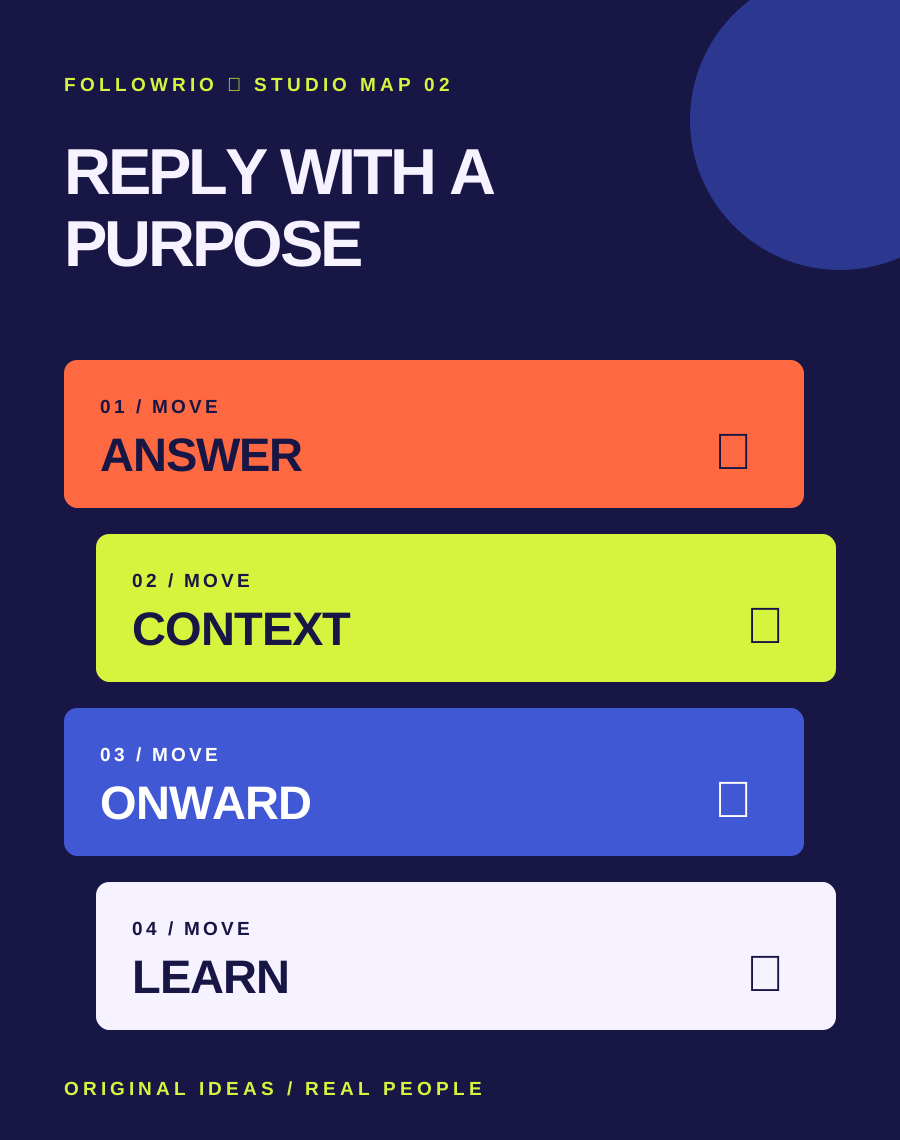
The useful-reply ladder
A good reply can help the person who asked and the next reader. Use this ladder when a comment invites a real answer; skip it for spam, private details or conversations that should move to a safer channel.
- Answer
Respond directly to the question in the first sentence, even when the answer is 'we do not know yet'.
- Add context
Include one reason, limitation or example that makes the answer more useful than a generic thank-you.
- Point onward
Link to a relevant guide or explain where the person can find current details. Do not force a sales pitch.
- Learn
If the same question returns, update the original post or create a clear public answer.
Imagine a local museum asked whether an exhibit has step-free access. The reply gives the current access route and a contact for changing conditions. After the question repeats, the museum updates its visitor information so the answer is easy to find before anyone asks.
A public comment is not the place to ask someone for account details, payment information or a private story.
READ THE PRIMARY SOURCE / Meta: features for community replies and insights ↗
THIS WEEK ✳
Spend fifteen minutes responding to existing questions with information that would help a new visitor too.
Before you go.
Should I reply to every comment?
Prioritize genuine questions and useful contributions. A thoughtful response is more valuable than a generic reply to every line.
What makes a collaboration worthwhile?
Start with a shared audience need and a clear contribution from each person. Agree on credits and any required disclosures before publishing.
Three replies for a difficult public comment
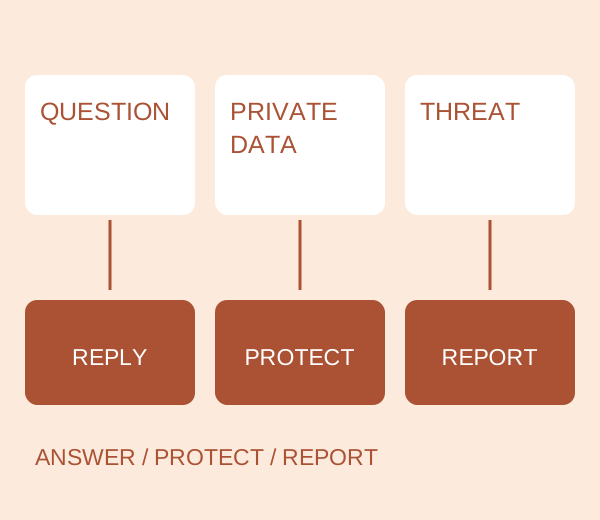
A useful moderation response answers the public question while moving private details to a channel you control. The situations below are invented. They teach wording and escalation; they are not records of a real customer dispute.
- Classify the content before replying: criticism, a question, personal data, or a threat. Criticism alone is not a reason to expose the writer or publish their order history. Apply a written rule consistently.
- For a public service question, state the next useful step without asking for identifiers in comments. Give the route through your established profile or contact page. Do not invite passwords, payment data or identity documents.
- If personal information is visible, preserve only the minimum private incident note needed, restrict access, and use the platform’s current moderation/reporting controls. Avoid copying the information into a second public reply or screenshot.
- Escalate a credible threat through the platform’s reporting route and appropriate local assistance. Do not promise a resolution time you cannot staff. Record the rule, action and owner so another moderator can continue.
| Field | Example or check |
|---|---|
| Criticism without private data | “The instructions were confusing.” Reply: “Which step was unclear? We can explain the process here; please leave account details out of comments.” |
| Order question | “Where is my order?” Reply: “Please use the contact link on our profile so the team can check privately. Do not post your order number or address here.” |
| Private data already posted | Reply without quoting it: “For your privacy, please remove those details and use our established contact route.” Use available moderation controls according to your rule. |
| A repeat of an answered complaint | Link the substantive answer once, explain the rule applied, and escalate privately if facts still conflict. Do not call the person dishonest from an incomplete comment. |
| Moderator handover | Category __; public answer __; rule applied __; minimal private record location __; next owner __; unresolved question __. |
Keep a correction route for a mistaken moderation decision. These scripts do not establish that a platform’s controls are identical across account types or versions; check the actual interface before acting.
Sources: Instagram Help — community guidance
A collaboration brief that can survive a disagreement
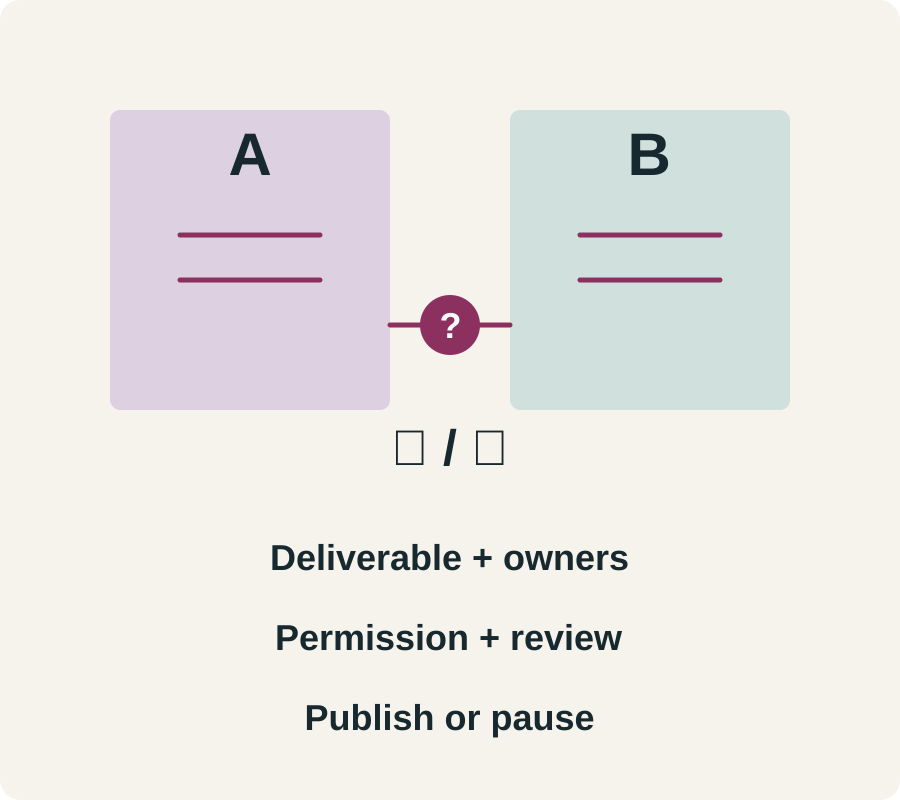
A credit line is useful, but it does not settle who can edit a joint post, reuse its images or withdraw before publication. Agree these points while the collaboration is still easy to change.
- Name one audience question and one deliverable. List the exact channels and languages; a joint post does not automatically authorize a newsletter or advertisement.
- Assign drafting, factual review, accessibility and publication. Set a review cutoff and name the person who can pause publication. Silence does not grant image rights or approve a factual claim.
- Record image provenance, permitted uses, credits and any commercial disclosure. Obtain the actual permission rather than treating a tagged account as consent.
- Agree how corrections and withdrawal work. Identify what can be removed before publication and how a correction will be requested afterwards.
Invented brief: two local creators prepare one English carousel explaining how to bring a reusable container to a community lunch. Creator A supplies text; B supplies an original drawing licensed only for that carousel. A checks access instructions with the organizer. Both review captions by Thursday; either can pause if a factual question remains. No paid promotion, email reuse or promised reach is included.
Copy: audience question __; deliverable/channels __; owners __; evidence __; image permission/credit __; disclosure __; approval cutoff __; pause/correction contact __. If the organizer has not confirmed access, omit that claim or postpone it. After publication, judge whether the promised information was delivered; likes do not establish trust or attendance.
Source: about.fb.com.