Measure progress beyond follower count
Follower count is easy to watch and easy to misread. A smaller audience that saves useful posts, visits your site, or asks informed questions may be more valuable than a larger passive one.
Define the job of the account
An awareness account may track reach and profile visits; a service account may care more about qualified enquiries. Choose measures that match the purpose.
Compare like with like
Review similar formats over several posts before drawing a conclusion. A single viral result can distort an average and hide the performance of ordinary content.
Turn learning into an experiment
Change one meaningful element at a time: the opening, topic, format, or call to action. Record the hypothesis and what happened, including unexpected outcomes.
The signal-to-action sheet
A useful metric starts with the job of the account. Before opening Insights, write what someone should understand or do after seeing the content.
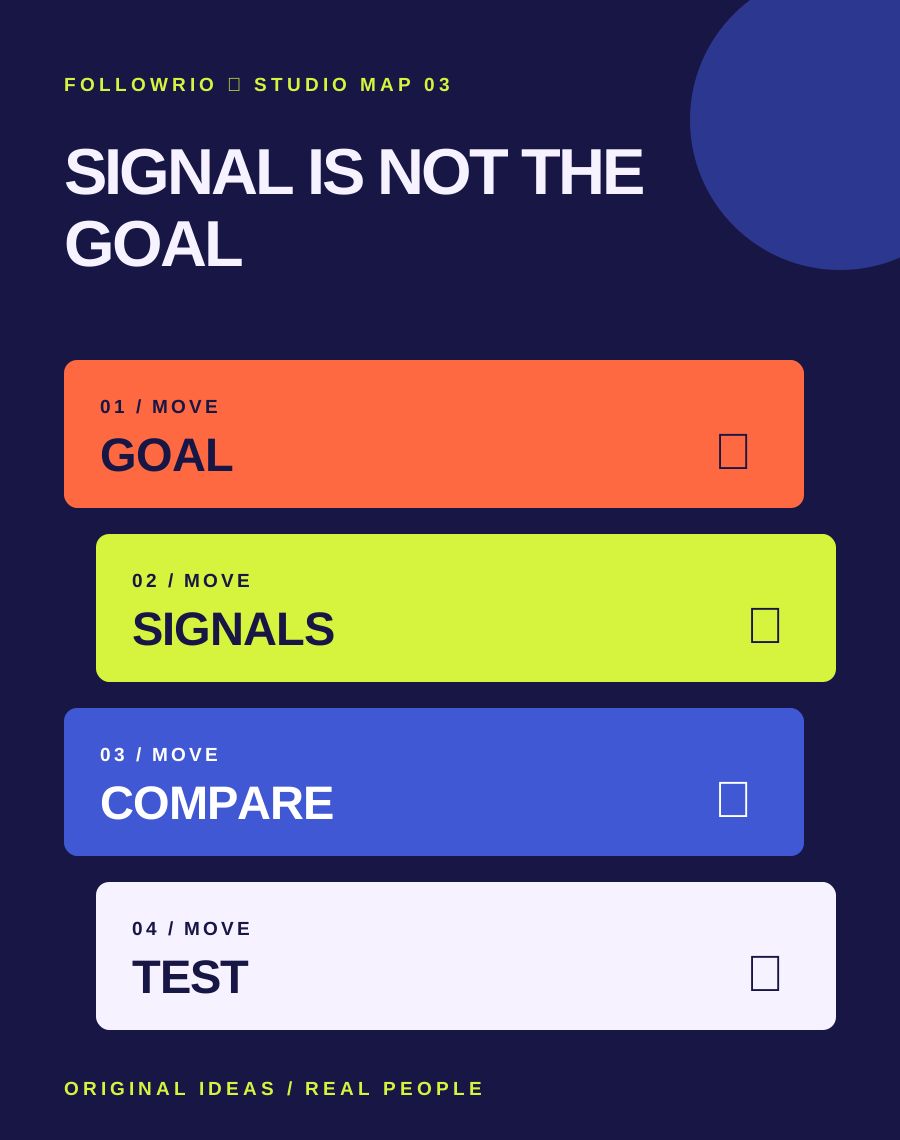
- Name the goal
Choose one outcome for the current series, such as informed enquiries, repeat visits or helpful discussion.
- Pick signals
Select a small set of available measures that might indicate progress. Reach describes distribution; it does not prove value by itself.
- Compare fairly
Look at similar posts over a comparable time window. Note paid support, format changes and unusual events.
- Choose a test
Change one topic, opening or format next. Record what you expected and what happened.
Imagine a repair workshop whose maintenance guide gets fewer views than a funny Reel but more specific booking questions. If bookings are the goal, the guide may deserve another test before the team chases the larger reach number.
Avoid treating one viral post as a new baseline. The next decision needs a pattern, not a single high point.
READ THE PRIMARY SOURCE / Instagram Best Practices for creators ↗
THIS WEEK ✳
Review the last ten posts and write one hypothesis about what your audience finds most useful.
Before you go.
Are followers a useless metric?
No. They describe potential reach, but alone they do not show whether people found the work useful or took a meaningful next step.
When should I change direction?
Look for a pattern across comparable posts, then test one change at a time. Record what else changed during the period.
Trial Reels as a documented content experiment
Trial Reels can help a creator try a different topic or presentation before sharing it broadly with followers. Meta describes initial distribution primarily to non-followers. Its announcement says performance signals become available after roughly 24 hours and describes optional automatic sharing based on views within the first 72 hours. Treat these as platform guidance, not a guarantee that every account has identical controls today. Check the current composer before planning a trial.
Check the feature before writing the experiment
In the Instagram app, prepare the Reel and check whether the Trial control is present. Record the date, account type and available sharing options. If the control is missing, do not invent an eligibility explanation or buy a “feature unlock”. Save the creative brief and use a clearly labelled ordinary-post comparison instead. A trial is also not a secrecy setting: Meta notes that followers can encounter it through sharing or other discovery routes.
Choose a question the recording can answer
“Will this go viral?” leaves little room for learning. A repair workshop can ask whether a close-up opening explains the inspection step more clearly than a finished-object opening. Keep the task, length and promise similar; change the opening. Ask a few viewers to describe the actual step, with consent, and keep those observations distinct from aggregate platform metrics. A trial cannot randomise the audience for you.
Write the observation window in advance
Take the first snapshot at a fixed age, such as 24 hours after publication, and the second at 72 hours. Use the same age for the next trial. Record the metrics actually available, their labels and any later sharing decision. If you enable automatic sharing, record that choice: audience distribution can change, so a before-and-after difference is not solely an opening effect. Views and reached accounts are different bases; do not silently swap them.
Worked example: a rate and its limits
Invented numbers: one clip has 1,200 views and 18 recorded shares; another has 800 views and 16 shares at the same age. Shares per 1,000 views are 15 and 20 respectively. The second has a larger rate but fewer shares in total. Views may include repeat viewing, while sharing and distribution can influence each other. These two observations do not prove which opening caused the difference.
Record competing explanations: topic appeal, account activity, time of publication, paid support, a repost or a different first audience. If you cannot identify whether a metric covers the same period or surface, write “not comparable” instead of calculating a precise-looking improvement. Do not claim a download, enquiry or sale from a view unless a lawful, relevant record supports that event.
Close the experiment with a practical decision
Decide whether to repeat the hypothesis with another relevant topic, revise the explanation, or stop because the intended audience task remains unclear. Retain unsuccessful attempts in the log. The worksheet asks for one changed element, the window and denominator, and the next decision. It runs locally and does not connect to Instagram or collect account data. This method is our editorial procedure; no performance test on a real account is claimed.
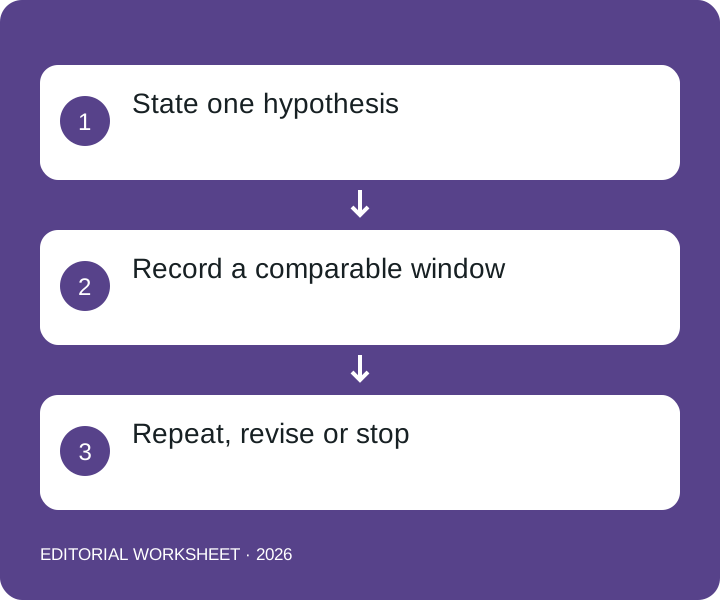
Text equivalent: State one hypothesis → Record a comparable window → Repeat, revise or stop.
Prepare a local worksheet
Your text stays in this page. It is not sent, stored or checked for accuracy. Use anonymised examples.
Download blank worksheet and filled example ↓