Make content worth discovering without an Explore hack
No creator can promise an Explore placement. You can make the work clearer, more original and more useful to the people it is for.
An archived FollowRio page asked how to reach Explore. The better current answer begins with a distinct audience need, a post that answers it and a way to learn from real responses. Recommendations change and remain personalized, so a universal trick would be misleading.
Choose one audience question
Write the question in the audience's own terms. A small travel publisher might hear 'How do I use the local bus with luggage?' more often than 'What should I visit?' The narrower question gives you a reason to make a useful map, short video or carousel that another account cannot simply reproduce from a generic list.
Show the source of your answer: your own demonstration, a tested route, an interview you have permission to quote or a current official source. Label any limitation, such as seasonal schedules or a place you have not personally visited. Specificity and honesty are editorial strengths even when a post reaches fewer people.
Make the answer easy to understand
The opening should name the question and promise the answer that actually follows. Use readable text, meaningful captions and a visual sequence that works without sound where possible. A saved post is only valuable if someone can use it later; do not hide the essential step behind a vague cliff-hanger.
Give the audience a next step appropriate to the answer: a checklist, a source link, a follow-up question or a longer page. Avoid asking for a comment merely to receive information you could have included. If a platform feature changes, the owned page can hold the durable explanation while the post points people toward it.
Learn from the right signals
Compare several posts answering similar questions rather than treating one spike as a verdict. Look for relevant replies, saves, profile visits, enquiries and the questions people ask afterward. Each signal means something different; a large reach with no useful response may be less valuable than a smaller post that helps the right person act.
Change one element at a time: the question, example, opening or format. Keep a small record of what changed and what did not. Meta says recommendations can be personalized and reset by users; this is another reason to treat placement as a possible result, not a promise the creator controls.
The discovery brief
Use this before making a post; it focuses on choices you control rather than an unknowable algorithm.
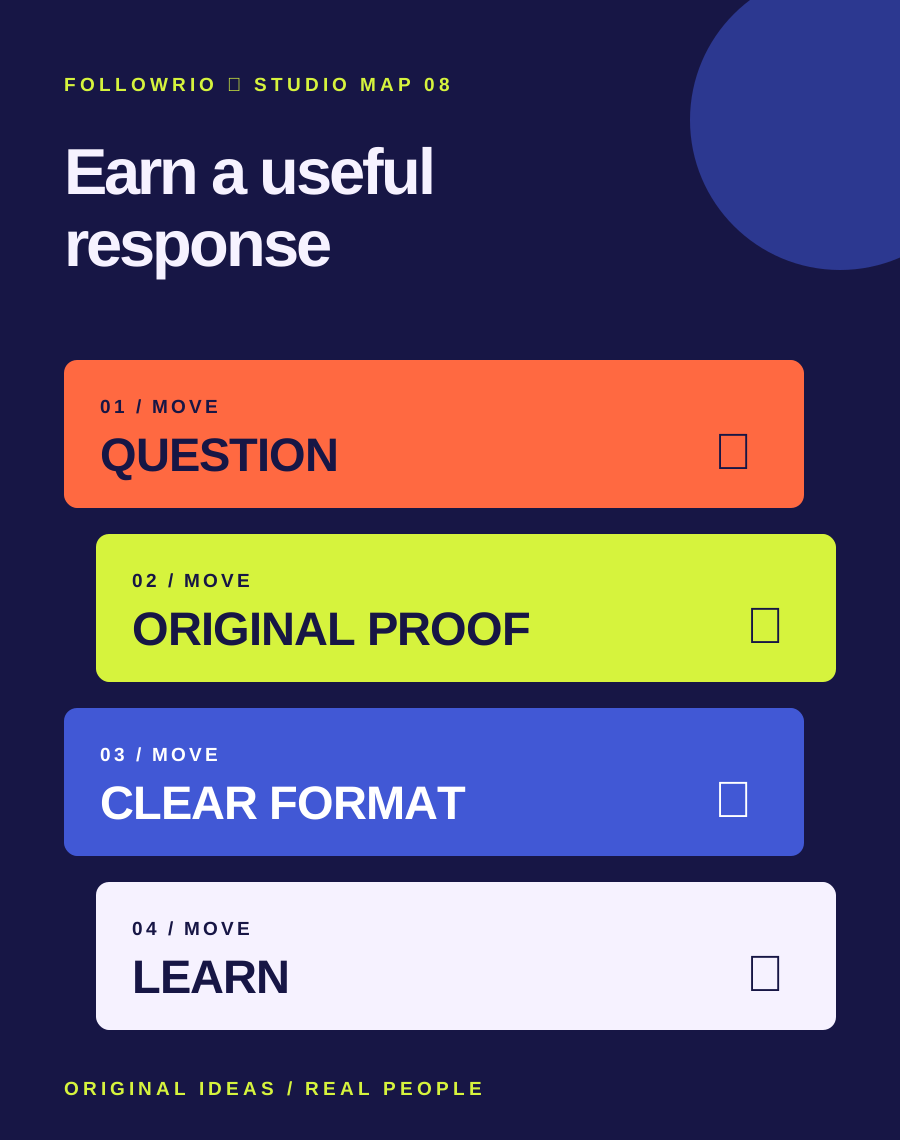
- Question
Write the exact audience problem this post answers.
- Proof
Choose an original example and a source for changing facts.
- Format
Make the answer legible and usable in its chosen medium.
- Learn
Decide which responses will inform the next version.
Fictional example: a city guide repeatedly hears that visitors cannot find step-free museum entrances. It makes a short, captioned route video based on a verified visit and links to the museum's accessibility page. The publisher updates the guide when a visitor reports a changed entrance. The goal is a dependable answer, regardless of whether Explore recommends the post.
Do not claim a guaranteed ranking or a fixed algorithm recipe. Instagram's recommendations and product controls may change; review Meta's current guidance before a platform-specific claim.
Read the context.
Archive captures identify the old question. Platform features and support routes can change; these links are starting points for checking the current state.